NZISM News
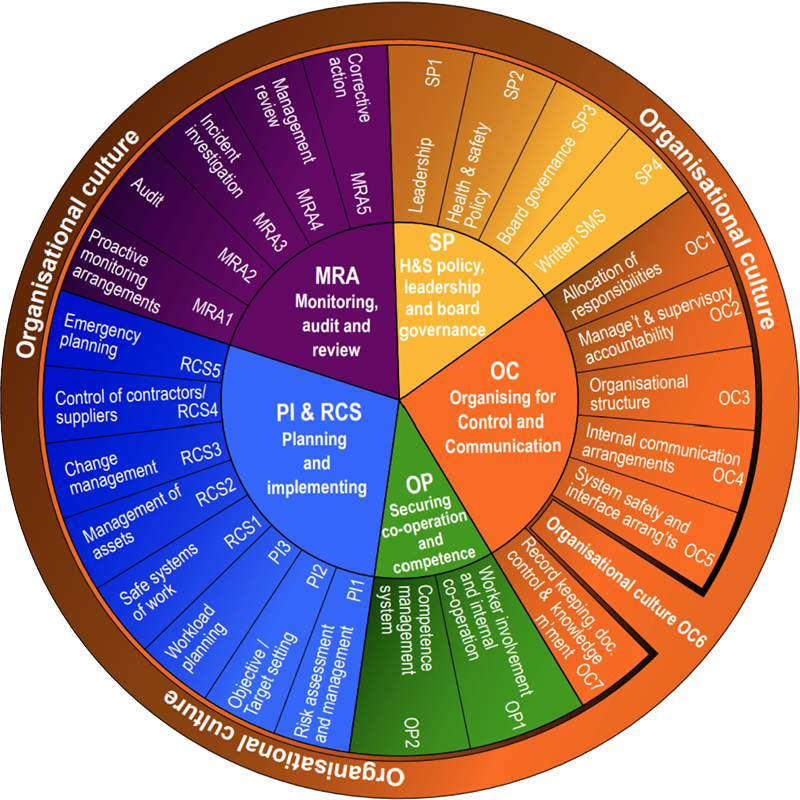
One of the questions I'm asked a lot is how an organisation can benchmark its health and safety system. Often, a range of metrics are used and personally I’m pleased to see the reduction in the use of TRIFR (Total Recordable Injury Frequency Rate) as the wonder child of health and safety metrics. A number of you will recognise this but one of my favourite tools for benchmarking, because of its health and safety culture approach, is the UK-based Risk Management Maturity (RM3) Model.
This model, from 2019, is a framework developed by the UK Office of Rail and Road (ORR) in collaboration with the rail industry and was designed to help organisations achieve excellence in health and safety management. It is specifically designed to fit in with an organisation's own management system, setting out criteria for key elements of a health and safety risk management system and identifies steps to evaluate an organisation’s progress through five levels of maturity, from ad-hoc to excellent. By applying the model, it enables better understanding of which areas are performing well, and others where additional work is needed.
On the positive side, RM3 is relatively simple to use and has good descriptors for each level of maturity, making it easy for organisations to understand where they stand and what they need to do to improve. It allows for repeated benchmarking, enabling organisations to track their progress over time and make continuous improvements. Additionally, RM3 is free, and there are a number of tools supplied by ORR to assist the process, including e-learning modules. These resources make it accessible and practical for organisations of various sizes and sectors.
However, RM3 does have some drawbacks. One challenge is the need to adapt the model to both a New Zealand and business context, although this is relatively easy with some customisation. Another issue is the potential over-emphasis on documentation in some areas, which can lead to a focus on paperwork rather than practical improvements. And for small organisations or those newer to structured risk management, applying the full RM3 process may be challenging due to the resources and commitment required.
Regardless, RM3 is a useful tool to have in your toolbox and can be used as a guide or an in depth assessment tool depending on your need.
It’s well worth considering. Take a look.
Ngā mihi
Robyn Bennett